Find the energy incentives your building qualifies for.
We track federal, state, utility, and local programs for energy and green-building work and match them to a specific address. When a program changes its rules or runs out of money, the buildings it affects get flagged.
- Federal
- 21
- Texas statewide
- 8
- Utility, county & city
- 60
The 60 local programs cover the whole county. A specific address narrows that to its own utility and city, which is what a report shows you.
Black Friday: your first report free, Nov 25–30.
Black Friday: your first report free.
Through Monday, Nov 30, your first report comes with its first year free. No credit card needed.
- Credit card
- None needed. Reports are an annual subscription; if you never add a card, yours cancels itself, so nobody is charged automatically.
- Who
- Anyone buying their first report, including accounts that signed up earlier but never bought one. Not for accounts that hold or have held a Pro or legacy subscription, or that already have a card or other payment method saved on their account: those get the normal paid checkout.
- Limit
- One free report per buyer, up to 500 in total. Past that, checkout is the normal paid one.
- Dates
- Nov 25 at 12:00 am through Nov 30 at 11:59 pm Central.
Most of the money is local, and it’s scattered.
Utilities, counties, and cities each write their own programs on their own schedules, and nobody keeps a shared list. Below is every county in the country shaded by how many local HVAC programs our database has for it. Federal and statewide programs stack on top of that.
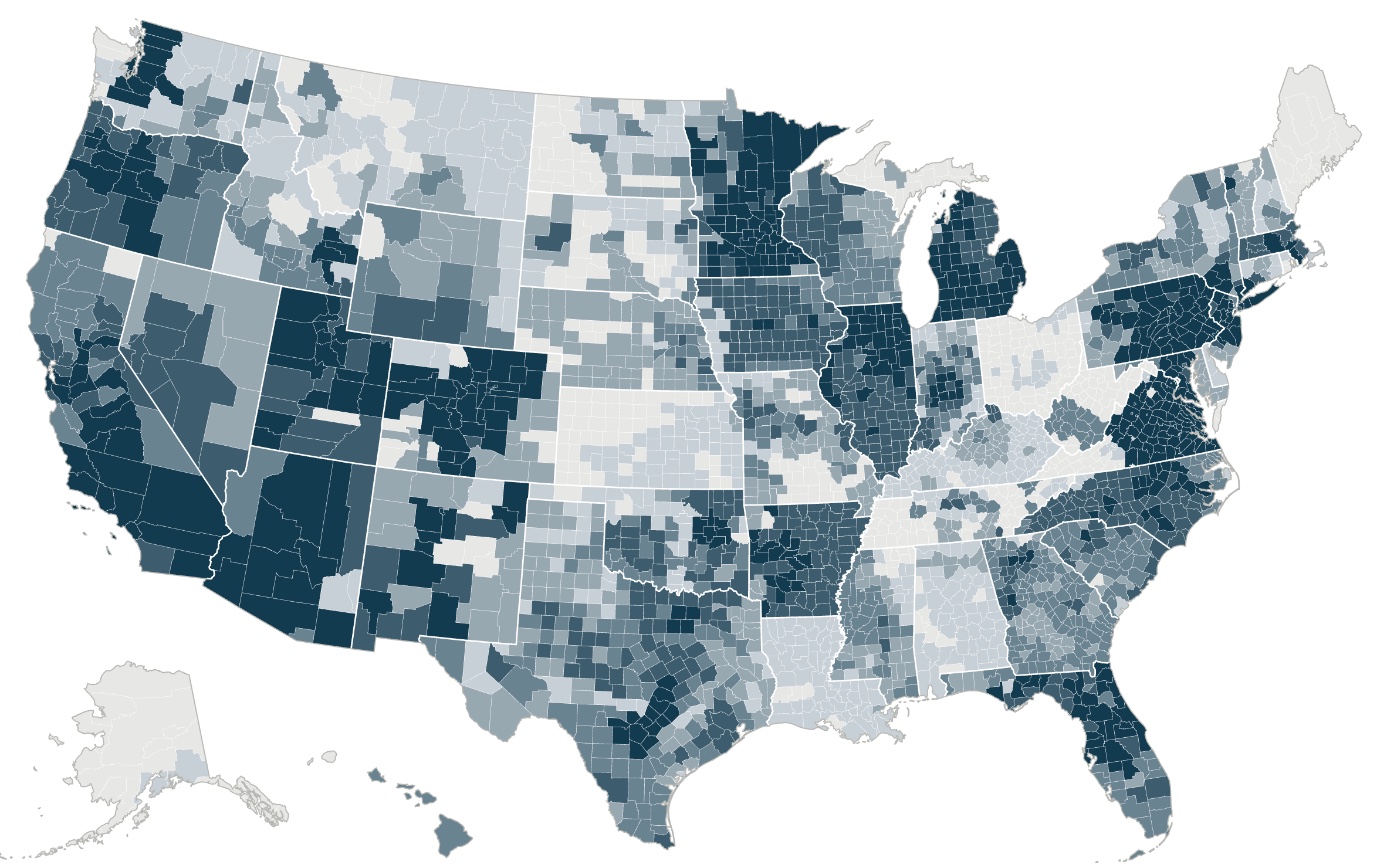
Metros with the most local HVAC programs right now:
- Philadelphia–Camden–Wilmington210
- Washington–Arlington–Alexandria188
- New York–Newark–Jersey City169
- Minneapolis–St. Paul154
- Chicago–Naperville–Elgin150
How it works
Add your buildings
One address or a spreadsheet
We work out which state, county, city, and utility territory each address actually falls in. That’s the part people usually get wrong by hand, because utility lines rarely follow city lines.
See what qualifies
Matched on eligibility rules
Each program is checked against the building and the work you’re planning. You get the criteria in plain English, the paperwork it needs, the filing window, and what would disqualify you. Some programs only open up if you change the scope a little, and we show those too.
Stay on top of it
Shortlists, owners, deadlines
Save the programs you’re pursuing, assign someone to each, and attach documents. If a program gets amended or its funding runs out, you hear about it.
Everything in the app is also available through the API, if you’d rather pull results into your own tools.
Who uses it
Owners and operators
Put incentive value into the capital plan before the project is approved instead of finding it after.
Developers and general contractors
See how a design or equipment choice changes what a project qualifies for while drawings can still change.
Energy and sustainability teams
Show where the funding for a decarbonization plan comes from, with a source link for every number.
Software platforms and lenders
Show incentive eligibility inside your own product through the API, under your own brand.
Who’s building it
We’re based in Austin. Jonathan spent eleven years at Verisk, the last stretch running BuildFax, which turned building-permit records into data insurers underwrite against. Doug spent more than a decade developing utility-scale renewable projects and knows first-hand how much of a project’s economics rides on incentives. Albert and Landon have built software for regulated industries, where every number has to trace back to a source.
What makes incentive data hard is that every program is written differently and changes without notice. We treat that as an engineering problem.
- Jonathan KanarekCEOVerisk, BuildFax, SaveDay
- Doug HerlingChief Commercial OfficerOpen Road Renewables, Pioneer Green Energy
- Albert SwantnerCTOVerdara, Nameless CPG
- Landon ForshageVP of EngineeringVerdara, SaveDay
- Full backgrounds on the About page →